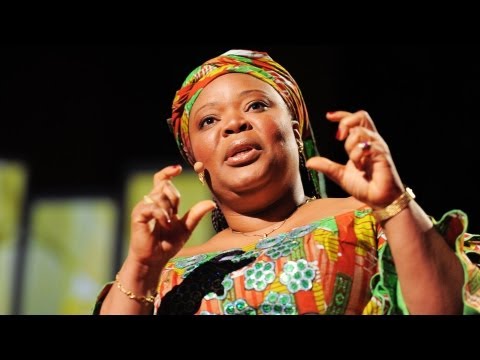
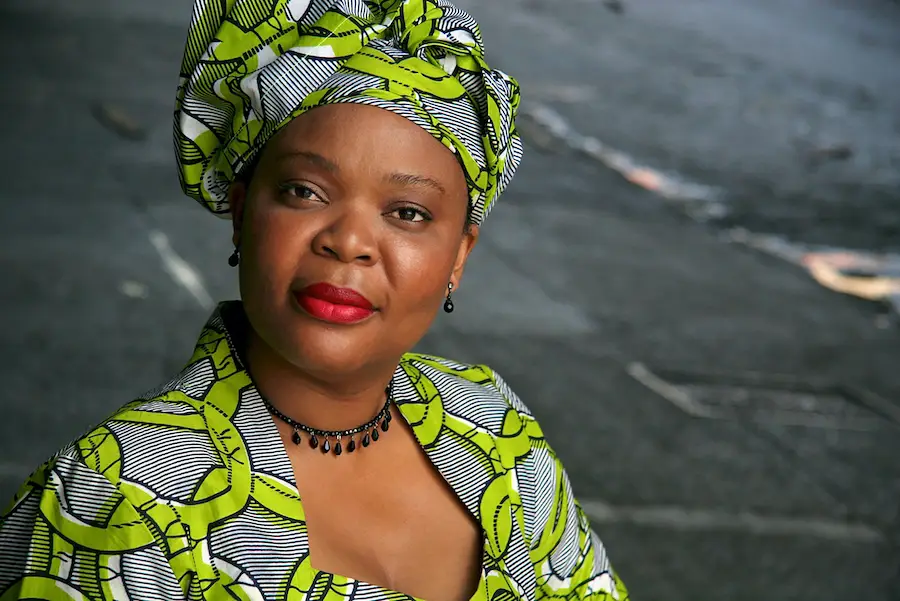
Leymah Gbowee is a Liberian peace activist, trained social worker, women’s rights advocate and 2011 Nobel Peace Prize laureate. Internationally recognised for her leadership in bringing women together across religious divides during Liberia’s civil war, she speaks about peacebuilding, women’s leadership, social change and the power of nonviolent action.

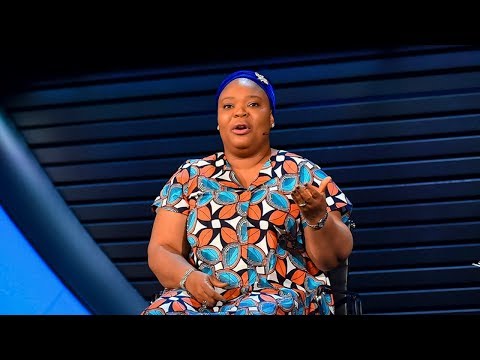
"I’ve had people, faculty and staff who’ve witnessed many of our commencements, this being our historic fifteenth, tell me it was one of the best commencements they can remember [because of] Leymah’s words, her passion for the future role of our students"
"Ms. Gbowee's talk at the Dartmouth College Centennial Circle Forum was met with RAVE reviews. The feedback we have received in our post event survey has been all positive. Our audience was inspired by her citing experiences along her path to the Nobel Peace Prize that could have happened to any one of them, such as falling in love with the wrong person. They felt connected to her, inspired to commit to other women and to the causes of education and peace."
"Leymah was simply electrifying yesterday…. so many women came up and told me that they cried, laughed, and were deeply moved in the one hour that Leymah spoke. We, at Visionary Women, would like to extend our deepest gratitude to her. She is truly a light in the world."
Leymah Gbowee rose to international prominence through her leadership of the Women of Liberia Mass Action for Peace. The movement brought together Christian and Muslim women in a sustained campaign of nonviolent protest that played a pivotal role in bringing Liberia’s civil war to an end in 2003.
As spokesperson for the movement, Gbowee helped mobilise thousands of women to demand peace and put pressure on Liberia’s political leaders, including then-President Charles Taylor. Their efforts helped drive progress in the peace negotiations and became an influential example of how women can shape peace and security processes.
In recognition of her work, Leymah Gbowee was jointly awarded the 2011 Nobel Peace Prize alongside Ellen Johnson Sirleaf and Tawakkol Karman. The Nobel Committee recognised their nonviolent struggle for women’s safety and their right to participate fully in peacebuilding.
Her role in the Liberian peace movement is chronicled in her memoir, Mighty Be Our Powers, and in the award-winning documentary Pray the Devil Back to Hell, which won Best Documentary at the Tribeca Film Festival.
A trained social worker and peacebuilder, Gbowee holds an MA in Conflict Transformation from Eastern Mennonite University. Her early work included supporting former child soldiers and communities affected by conflict, experience that helped shape her approach to reconciliation and peacebuilding.
She is the Founder and President of the Gbowee Peace Foundation Africa, which works to create educational and leadership opportunities for women, girls and young people. She also co-founded the Women Peace and Security Network Africa and previously served as its Executive Director. Earlier in her career, she was a founding member and Liberia Coordinator of the Women in Peacebuilding Network, part of the West Africa Network for Peacebuilding.
Gbowee currently serves as Founding Executive Director of
…
Leymah Gbowee rose to international prominence through her leadership of the Women of Liberia Mass Action for Peace. The movement brought together Christian and Muslim women in a sustained campaign of nonviolent protest that played a pivotal role in bringing Liberia’s civil war to an end in 2003.
As spokesperson for the movement, Gbowee helped mobilise thousands of women to demand peace and put pressure on Liberia’s political leaders, including then-President Charles Taylor. Their efforts helped drive progress in the peace negotiations and became an influential example of how women can shape peace and security processes.
In recognition of her work, Leymah Gbowee was jointly awarded the 2011 Nobel Peace Prize alongside Ellen Johnson Sirleaf and Tawakkol Karman. The Nobel Committee recognised their nonviolent struggle for women’s safety and their right to participate fully in peacebuilding.
Her role in the Liberian peace movement is chronicled in her memoir, Mighty Be Our Powers, and in the award-winning documentary Pray the Devil Back to Hell, which won Best Documentary at the Tribeca Film Festival.
A trained social worker and peacebuilder, Gbowee holds an MA in Conflict Transformation from Eastern Mennonite University. Her early work included supporting former child soldiers and communities affected by conflict, experience that helped shape her approach to reconciliation and peacebuilding.
She is the Founder and President of the Gbowee Peace Foundation Africa, which works to create educational and leadership opportunities for women, girls and young people. She also co-founded the Women Peace and Security Network Africa and previously served as its Executive Director. Earlier in her career, she was a founding member and Liberia Coordinator of the Women in Peacebuilding Network, part of the West Africa Network for Peacebuilding.
Gbowee currently serves as Founding Executive Director of the Institute on Gender, Law, and Transformative Peace at CUNY School of Law. The Institute brings together research, advocacy and grassroots movements to address gender justice, conflict, human rights and transformative approaches to peace.
She previously served as Executive Director of the Women, Peace and Security Program at Columbia University and has held distinguished fellowships at institutions including Barnard College. Her international work has also included advising and supporting initiatives focused on women’s rights, peace and security, youth leadership and sustainable development.
Gbowee has received honorary degrees from institutions including Rhodes University in South Africa and the University of Alberta in Canada. She was also appointed to the United Nations Secretary-General’s High-Level Advisory Board on Mediation in 2017 and previously served as a United Nations Sustainable Development Goals Advocate. She is now recognised by the UN as an SDG Advocate Emeritus.
As a keynote speaker, Leymah Gbowee brings first-hand experience of grassroots leadership, conflict resolution and social change to audiences around the world. Her story shows how determined communities can challenge entrenched power and how women’s leadership can influence peace processes at the highest level.
Her keynotes draw on her experience of the Liberian peace movement as well as decades of work in women’s rights and peacebuilding. She speaks candidly about leadership in difficult circumstances, reconciliation after conflict and what it takes to bring people together when divisions appear impossible to overcome.
For event hosts looking for a speaker on leadership, peace and security, women’s rights or nonviolent social change, Leymah Gbowee offers a perspective shaped by lived experience as well as international advocacy. Her work continues to focus on strengthening the role of women and young people in building safer, more peaceful societies.

Mary Robinson is a former President of Ireland and former United Nations High Commissioner for Human Rights, widely recognised for her leadership in climate justice and human rights. She was Ireland’s first female president, and has since built a global career as a lawyer, academic and international advocate. Her keynote presentations explore climate change, gender equality, responsible leadership and global cooperation, offering audiences a clear and human perspective on some of the world’s most pressing challenges.

Dame Kelly Holmes is a double Olympic champion, former British Army sergeant and inspirational keynote speaker. Best known for winning Olympic gold in both the 800m and 1500m at Athens 2004, she now shares powerful lessons on peak performance, resilience, mental health and achieving ambitious goals.
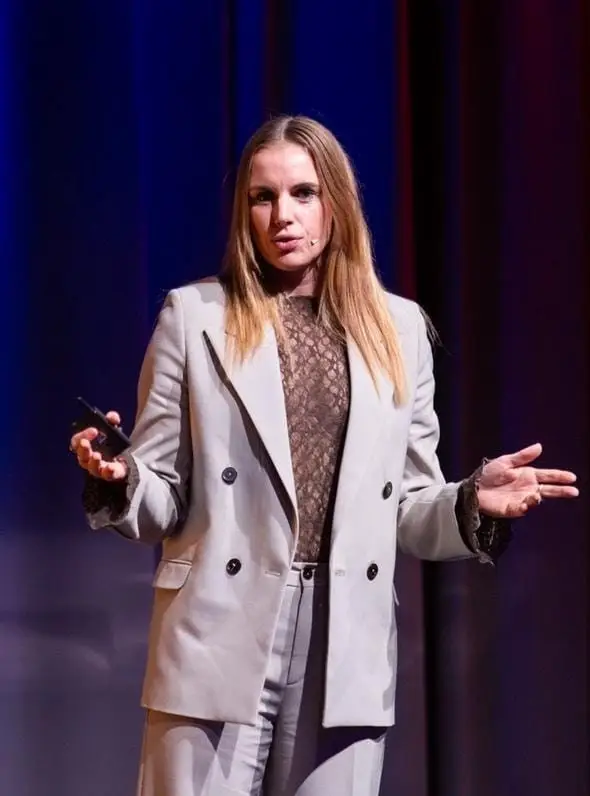
Speaker Ideas is proud to recommend Marit Bouwmeester, the most successful female Olympic sailor in history. Drawing on an extraordinary career at the pinnacle of elite sport, she equips organisations with practical strategies for resilience, personal leadership, growth mindset and performing with confidence under pressure.

Discover the transformative power of simplicity with Lisa Bodell, a leading futurist and the visionary founder of FutureThink. Book Lisa for your next event to explore her innovative approaches to eliminating complexity and embracing impactful work.

When corporate leaders seek to dismantle team silos, accelerate innovation, and drive exponential growth, they turn to Erica Dhawan. A globally recognised expert on teamwork and collaboration, Erica equips organisations with transformative strategies to foster trust, adapt to digital shifts, and achieve outstanding results.

Solitaire Townsend is a globally recognised sustainability expert, TED speaker and keynote speaker who helps organisations turn climate change into a story of action, creativity and possibility. As co-founder and Chief Solutionist at Futerra, she works with influential organisations to activate positive and optimistic change, giving business leaders a clearer way to approach sustainability, climate action and long-term impact.

Cathy O’Dowd is a South African mountaineer, author, and speaker, best known as the first woman to summit Mount Everest from both the north and south sides. She shares lessons from expeditions like Everest and the Mazeno Ridge on Nanga Parbat, focusing on leadership, teamwork, resilience, and decision-making under pressure.

Bruce Daisley is a keynote speaker, Sunday Times bestselling author and former Twitter executive known for his work on workplace culture and the future of work. A Bruce Daisley speaker profile combines senior leadership experience, practical insight and an engaging style. In his business career, he spent 12 years leading YouTube UK and Twitter across Europe, the Middle East and Africa.

Ailbhe and Izzy Keane are award-winning entrepreneurs who turn mobility into fashion. If you’re looking to book an izzy wheels ailbhe and izzy keane speaker, they deliver keynotes on innovation, inclusion, diversity, brand purpose and collaboration that genuinely makes business sense for your next event.

Julia Hobsbawm OBE
Julia Hobsbawm, recognised for her expertise on the future of work, has influenced many through her writing, speaking, and consulting. Her latest book, “Working Assumptions”, continues to challenge our understanding of workplace dynamics.