

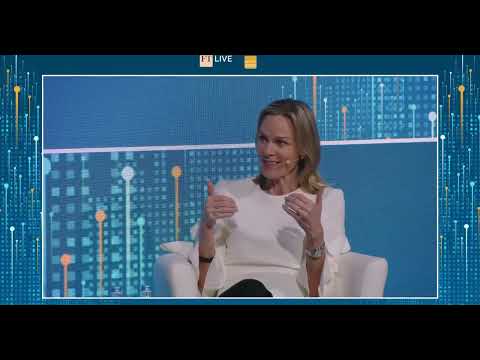
Anu Bradford, an authority on EU regulatory impact, coined the term “Brussels Effect” to describe its global reach in the digital economy. Recognised by the World Economic Forum as a key policy voice, her work continues to shape digital governance.



"The Brussels Effect may well be the single most important book on Europe's influence to appear in a decade."
"Digital Empires is a must read for anyone seeking to understand what's at stake in developing a practical regulatory framework that serves the needs of people everywhere."
"Digital Empires is a must read for anyone seeking to understand what's at stake in developing a practical regulatory framework that serves the needs of people everywhere."
Anu Bradford is a global economic regulation and foreign affairs professor at Columbia Law School. She is a leading expert on the digital world, data protection and international law and a popular keynote speaker.
Bradford’s work, particularly her books, has shaped public understanding of the European Union’s practical regulatory framework and its impact on business and markets. Her work also looks at how countries regulate AI within competing systems and what this means for a more digital society.
In The Brussels Effect, Bradford argues that the European Union rules extend beyond its borders, shaping business practices globally. For instance, international companies frequently adopt European Union regulations to maintain access to the European market, thus spreading the European Union’s outsize influence worldwide. This concept has sparked wide debate in both academic and business circles, so Bradford’s insights are particularly valuable for corporate audiences.
Her analysis is particularly relevant for companies in regulated industries, as she explains how global standards impact international trade law, competition and the EU’s global power. As a keynote speaker, Bradford informs business leaders on the bigger picture of regulatory power and how to adapt to the shifts in the global market.
Bradford’s latest book, Digital Empires: The Battle to Regulate Technology (2023), looks at the global race to regulate tech companies and the bigger picture of the tech war. In it, she explores how the three dominant digital powers—the U.S., China, and the European Union—are shaping the future of digital regulation.
The book looks at their three different visions for tech governance, their regulatory systems and the battle for tech supremacy in AI and digital technologies. It also examines the rise of tech protectionism, its impact on the global economy and the role of international antitrust law in shaping digital competition.
Named one of the best books of 2023 by Financial Times, Digital Empires cements Bradford’s credentials on tech regulation. Her insights into the geopolitics of the tech war are especially relevant as businesses worldwide navigate the fast-changing digital landscape.
Anu Bradford is a highly sought-after commentator and World Economic Forum Young Global Leader and delivers presentations at corporate events. As a distinguished professor of law and Anu Bradford speaker, she explains complex regulations that impact industries worldwide.
Her work is associated with institutions like Harvard Law School, Columbia Business School and Chicago Law School, so she knows global regulation inside out. She simplifies complex legal frameworks and links them to business practicalities, making her insights invaluable for companies navigating global regulation.
As a senior scholar and Moses Professor, Bradford’s research spans disciplines such as comparative social science research and international law. Whether analysing the EU’s regulatory power or the future of digital governance, Bradford’s expertise is frequently featured in top international news outlets.
She collaborates with academic centres like the Chazen Institute and the European Legal Studies Centre, offering actionable strategies for businesses to adapt and thrive in an evolving regulatory landscape. To book Anu Bradford for your next corporate event, contact us.

Leymah Gbowee is a Liberian peace activist, trained social worker, women’s rights advocate and 2011 Nobel Peace Prize laureate. Internationally recognised for her leadership in bringing women together across religious divides during Liberia’s civil war, she speaks about peacebuilding, women’s leadership, social change and the power of nonviolent action.

Dr James Hewitt is a human performance scientist, keynote speaker and author who helps leaders and teams perform under pressure, sustain high performance and protect their wellbeing. Drawing on more than 20 years of experience in human performance, his work brings together performance science, elite sport and the realities of demanding modern workplaces.

Mary Robinson is a former President of Ireland and former United Nations High Commissioner for Human Rights, widely recognised for her leadership in climate justice and human rights. She was Ireland’s first female president, and has since built a global career as a lawyer, academic and international advocate. Her keynote presentations explore climate change, gender equality, responsible leadership and global cooperation, offering audiences a clear and human perspective on some of the world’s most pressing challenges.

Robert Daverschot is an experienced event moderator, dagvoorzitter and speaker coach known for his calm, engaging presence on stage. With a background in hospitality, event production and TV talk show editing, he helps audiences feel involved and speakers feel at ease. Fluent in Dutch and English, he works with organisations in the Netherlands and abroad, moderating conversations with experts, ministers and business leaders while supporting keynote speakers to deliver stronger presentations.

Rita Clifton CBE is a leading global brand expert, business leader and keynote speaker. A former London CEO and Chairman of Interbrand, she has advised major organisations on brand strategy, reputation and growth, while building an extensive portfolio of chairing and non-executive director roles.

Dame Kelly Holmes is a double Olympic champion, former British Army sergeant and inspirational keynote speaker. Best known for winning Olympic gold in both the 800m and 1500m at Athens 2004, she now shares powerful lessons on peak performance, resilience, mental health and achieving ambitious goals.

Colonel Terry Virts is a former NASA astronaut, International Space Station commander, Space Shuttle pilot and retired United States Air Force colonel. With 213 days in space across two missions, he brings first-hand lessons on leadership, risk and teamwork to corporate audiences. As a keynote speaker, Terry shares an extraordinary perspective shaped by life in orbit and decades of high-pressure decision-making.
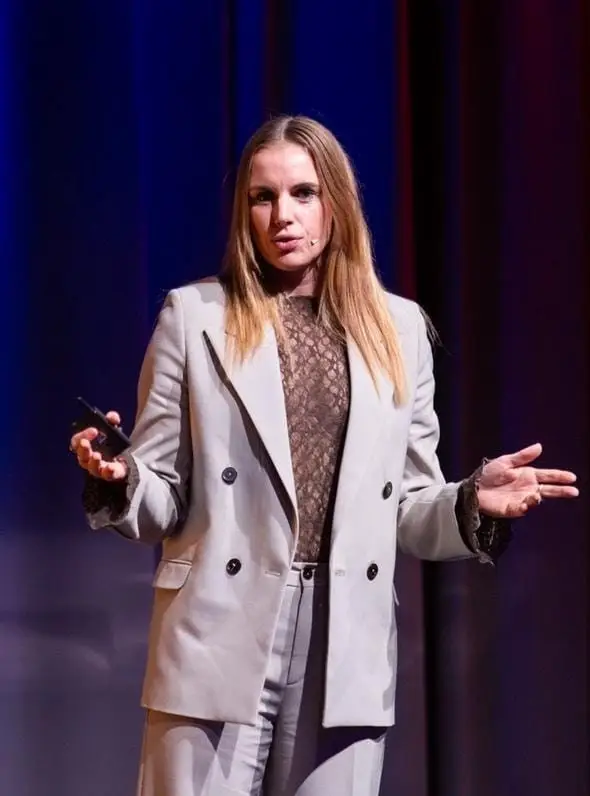
Speaker Ideas is proud to recommend Marit Bouwmeester, the most successful female Olympic sailor in history. Drawing on an extraordinary career at the pinnacle of elite sport, she equips organisations with practical strategies for resilience, personal leadership, growth mindset and performing with confidence under pressure.

Kishore Mahbubani is a distinguished diplomat and academic with over five decades in public service and academia. His profound insights on global policy, East-West relations, and diplomacy make him a sought-after keynote speaker for corporate events worldwide.

Julia Hobsbawm OBE
Julia Hobsbawm, recognised for her expertise on the future of work, has influenced many through her writing, speaking, and consulting. Her latest book, “Working Assumptions”, continues to challenge our understanding of workplace dynamics.