
Greatly admired for his personal integrity, charisma, leadership and outstanding oratory qualities, he is one of the most requested political speakers across the globe.
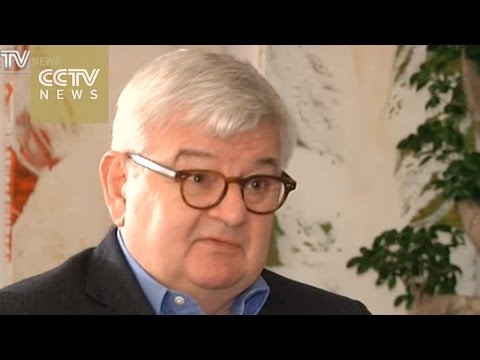

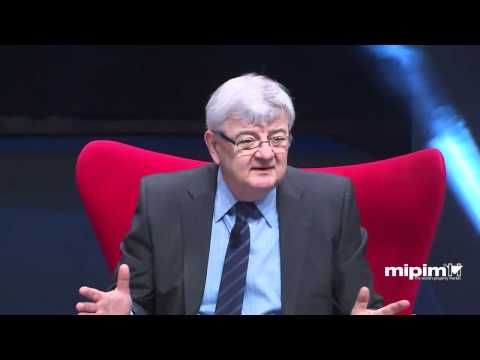
"Joschka was very impressive, with great knowledge. He gave an excellent performance with extremely good content."
Joschka Fischer was both German Foreign Secretary and Vice Chancellor from 1998 until 2005 and a leading political figure and expert in current affairs and crisis management.
Joschka Fischer was elected to the German Bundestag in 1983 and held one of the first Green Party seats in the governing body. In 1985 he became the Minister for the Environment and Energy in Hesse, becoming the first Green Party politician to hold government office. Upon this appointment he was the first German Green to assume a government post. From 1987 to 1991, Fischer served in various capacities in the Hessian State Assembly. He was Hessian Minister for the Environment, Energy and Federal Affairs from 1991 to 1994. In 1994 Fischer entered federal politics and became co-chairman of the Greens Party’s federal parliamentary faction. Fischer belonged to the realist camp of the party and personified a maverick form of European left politics – at once principled, pragmatic, pro-American and strongly pro-EU.
Joschka Fischer has been one of the most influential leaders of the German Green Party. Having moved the Green Party to the political centre, he formed a coalition with Gerhard Schröder’s Social Democrats in the 1998 federal election. Chancellor Schröder named Fischer as foreign minister and vice chancellor to the cabinet. As foreign minister, he stood against German popular opinion and faced down the majority of Green Party members who opposed German military participation in the Kosovo campaign, arguing against pacifism in the face of genocide and ethnic cleansing. But, as the Iraq war loomed, he clashed memorably with US defense secretary Donald Rumsfeld and positioned himself as one of the few outspoken critics of the Iraq invasion of 2003.
During his seven-year tenure as foreign minister, he was arguably the most popular politician in his nation and one of the most influential leaders of the German Green Party. Under Fischer’s leadership, the Green Party expanded its voice in the coalition in the 2002 federal election, achieving its best voting result to date.
From September 2006 until 2007, Joschka Fischer was a senior fellow at the Liechtenstein Institute on Self-Determination and a visiting professor at the Woodrow Wilson School of Public and International Affairs, both at Princeton University. He has also spoken at other American universities on various topics in foreign affairs and international relations. In 2007, he founded the Joschka Fischer Consulting company. He is a founding member and board co-chair of the European Council on Foreign Relations.
Since 2008, Fischer has been employed with the Albright Group, a Washington DC consulting firm led by Madeleine Albright. He currently runs an advisory firm in Berlin that serves a wide range of corporations and institutions. Additionally, he acts as a political advisor to the energy companies RWE and OMV in conjunction with the proposed Nabucco gas pipeline project. He serves on the Board of Trustees of the International Crisis Group and as Co-Chair of the Executive Board of the European Council on Foreign Relations.
Joschka Fischer has been recognised with many honours and awards, including honorary doctorates from the Universities of Haifa and Tel Aviv. In 2004, he received the Gottlieb Duttweiler Prize, and in 2005, the Leo Baeck Prize for his efforts in the Middle East conflict as a mediator between Palestinians and Israelis.
He is the author of several books, and his political commentaries are published widely.
One of Germany’s longest-serving foreign ministers, Fischer looks at the challenges and opportunities facing Europe. In addition to his familiarity with foreign and security policy issues, he is an internationally respected commentator on the classical green portfolio issues of energy and climate. Able to make presentations in several languages, he explores the EU’s impact on transatlantic relations, business and social issues and enlightens audiences with personal motivational anecdotes about applying diplomacy and championing leadership, negotiation and organisational renewal.
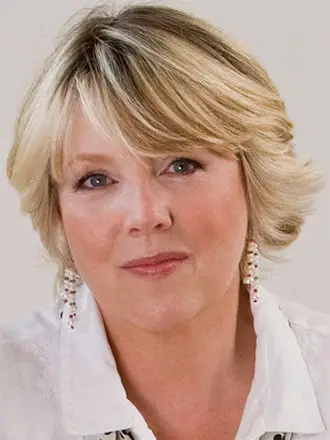
Jo Fairley is an entrepreneur, journalist, author and business speaker best known as the co-founder of Green & Black’s. Drawing on decades of experience building successful brands, she speaks about entrepreneurship, brand development, sustainable business and the lessons learned from turning a niche organic chocolate venture into an internationally recognised name.

Mary Robinson is a former President of Ireland and former United Nations High Commissioner for Human Rights, widely recognised for her leadership in climate justice and human rights. She was Ireland’s first female president, and has since built a global career as a lawyer, academic and international advocate. Her keynote presentations explore climate change, gender equality, responsible leadership and global cooperation, offering audiences a clear and human perspective on some of the world’s most pressing challenges.

Kishore Mahbubani is a distinguished diplomat and academic with over five decades in public service and academia. His profound insights on global policy, East-West relations, and diplomacy make him a sought-after keynote speaker for corporate events worldwide.

Solitaire Townsend is a globally recognised sustainability expert, TED speaker and keynote speaker who helps organisations turn climate change into a story of action, creativity and possibility. As co-founder and Chief Solutionist at Futerra, she works with influential organisations to activate positive and optimistic change, giving business leaders a clearer way to approach sustainability, climate action and long-term impact.

Misha Glenny is an award-winning journalist, broadcaster, author and keynote speaker specialising in geopolitics, cyber security and organised crime. A former BBC Central Europe Correspondent, he brings decades of frontline experience to corporate events, helping audiences understand cyber threats, global organised crime, great power relations and the forces reshaping business and society.

Christiana Figueres is a Costa Rican diplomat, former Executive Secretary of the United Nations Framework Convention on Climate Change and an internationally recognised leader on global climate change. Best known for helping secure the historical Paris Agreement, she inspires audiences with lessons in collaborative diplomacy, climate leadership and stubborn optimism.

Bertrand Piccard is a Swiss explorer, psychiatrist and clean technology pioneer known for turning ambitious ideas into world-changing missions. For event hosts looking for a Bertrand Piccard speaker with real authority on innovation, sustainability and leadership, he brings an unusual mix of scientific credibility, adventurous thinking and business relevance.

Alex Edmans is Professor of Finance at London Business School and one of the clearest voices on responsible business, corporate finance and behavioural finance. For event hosts looking for a speaker with real credibility, he brings a rare mix of academic research, practical business experience and genuine clarity on stage.

Nina Schick is a geopolitical strategist and AI expert specialising in the global race for Artificial General Intelligence and industrial intelligence. She helps business leaders and policymakers understand how AI infrastructure, generative technology and geopolitical competition are reshaping global power, security and economic strategy.

Arancha González Laya
Arancha González Laya has served as Dean of the Paris School of International Affairs (PSIA) at Sciences Po since March 2022. With extensive experience in global economics and political affairs, she has held notable positions such as Spain’s Minister of Foreign Affairs and United Nations Assistant Secretary-General.