

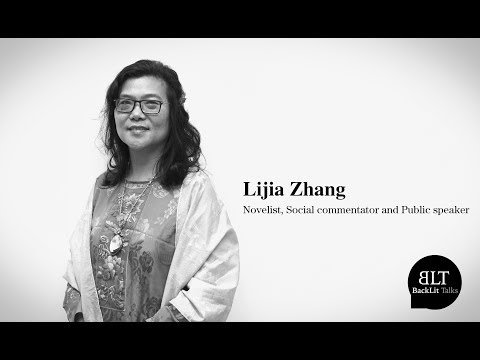
Lijia Zhang is a rocket-factory girl-turned writer, columnist and public speaker and one of the few Chinese social commentators who write in English for international p


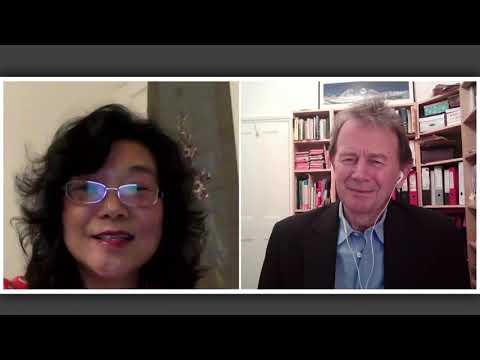
"Love the candid sharing of her story and the humour she was able to relay, especially the spitting contest!!"
"Set against China’s breathless recent transformation, ‘Socialism is Great!’ offers a rare and intimate glimpse of a country and culture that are now reshaping our world."
"Lijia Zhang’s Lotus, her debut novel, unfolds like a mystical Oriental fan. All of the characters seem to be in various stages of awakening and decay, and suffering from various degrees of hopelessness and hopefulness all at the same time. What an insightful verdict against a society that seems to be spiraling out of control. One comes to love India because of Arundunti Roy’s God of Small Things, a Booker Prize winner, and one would surely love the hot and humid Southern China of her invention, through this brilliant novel. Both were debuts; both written in the most inventive prose. You will cry, and in the end, laugh in celebration not just of the winning characters, but Zhang’s true gift as an essential novelist of this world"
Lijia Zhang is a rocket-factory girl-turned writer, columnist and public speaker and one of the few Chinese social commentators who write in English for international publications.
Lijia was born into a poor working-class family in Nanjing, on the banks of the Yangtze River. Excelling at school, she dreamt of becoming a writer and a journalist. In 1980, aged 16, Lijia was dragged out of school and put to work at a military factory that produced intercontinental missiles. It lasted for a decade. As an escape route, she taught herself English and took solace in literature.
Lijia arrived in England in 1990, and a childhood dream stirred. She studied journalism. Returning to China three years later, she started her career by helping foreign correspondents before becoming a journalist in her own right. It was a struggle to write stories in English, but compared to her Western colleagues, Lijia believed that she had something different to offer: her insight into a culture that still remains largely unknown outside China. Her articles, usually commentary pieces on China’s social, cultural and political changes, have been published in The South China Morning Post, The Far Eastern Economic Review, Japan Times, The Guardian, Newsweek and The New York Times.
China Remembers, an oral history of modern China commissioned by Oxford University Press, whetted her appetite for book writing. She went on to pen a memoir about her factory experience in the 80s, which also reflected the great social transformation in China brought about by the reforms and opening up. It enjoyed worldwide success.
Lijia then launched her first fiction project – Lotus, which tells the story of a young working girl, set in modern-day Shenzhen, known as China’s ‘capital of sins’. Like the city itself, Lotus is torn between past tradition and modern desires. It was published by Macmillan in March 2017 and has been featured by BBC World Book Club.
In 2018, Lijia won the Mulan Award to recognise her contribution to arts and literature.
Lijia has lectured at many top universities, institutions, banks, and business conferences around the world, including Columbia University, Stanford, Harvard, London Business School, European Institute for Asian Studies and the EU-Asia Top Economist Round Table Forum. She’s been featured on the BBC, Channel 4, ABC (Australian), Aljazeera, CNN, NPR, among other international media.
She divides her time between China and the UK.

Kishore Mahbubani is a distinguished diplomat and academic with over five decades in public service and academia. His profound insights on global policy, East-West relations, and diplomacy make him a sought-after keynote speaker for corporate events worldwide.

Linda Yueh, a distinguished economist, author, and speaker with a profound impact on global economic discussions, specialises in macroeconomics, globalisation, and China’s economic evolution. Her expertise enriches numerous prestigious institutions and media outlets.
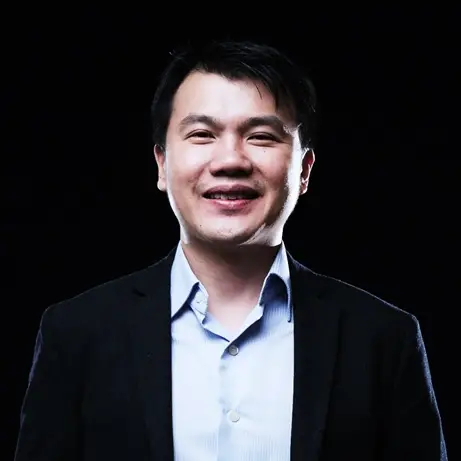
Charlie Ang is a corporate futurist, AI strategist and innovation leader who helps organisations prepare for an intelligence-abundant future. Combining strategic foresight with practical business experience, he equips leaders to embrace AI, navigate disruption and build future-ready organisations with confidence.

John Thackara is a writer, curator and leading voice on sustainable futures. He connects design with daily life, clean growth and mental wellbeing, sharing real-world stories from cities and bioregions. He helps diverse partners build lasting ecological relationships, publishes at thackara.com, and speaks at conferences, corporate events and arts festivals.

Dive into political science and global politics with Ian Bremmer, founder of Eurasia Group and a leading expert in the field. Known for making complex international issues easy to understand, he offers clear, independent insights into global risks and their impact on the economy.

Pascal Coppens, author of the bestseller China’s New Normal, is a leading expert on modern China. Known worldwide as a go-to speaker and trusted by top business leaders, he offers rare insights on China’s future in innovation, politics, and leadership.

Ambassador Anthony Gardner’s extensive experience in policy, diplomacy, business, and law makes him an essential keynote speaker for corporate event planners. His insights on U.S. political shifts, transatlantic relations and global business strategies offer invaluable guidance to organisations navigating complex international landscapes.

Shaun Rein, Managing Director of China Market Research Group, is a leading expert on mainland China’s economy. Author of international best sellers, he is a top choice for organisations looking to hire Shaun Rein for speeches globally, offering unmatched insights.

An entrepreneur and thought leader on the transformation of customer relations and the future of customer-centric marketing in a time of AI.

Phil Hogan is a seasoned political leader and former EU Commissioner for Trade and Agriculture. With over 30 years of national and international experience, he offers powerful insights into negotiation, global trade, policymaking, and leadership in complex environments.
