

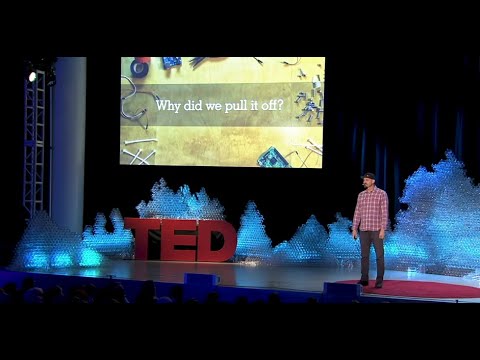
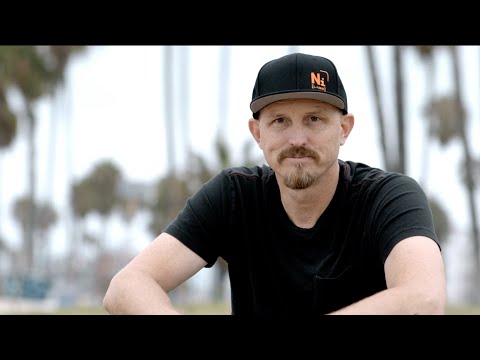
Mick Ebeling is the founder and CEO of Not Impossible Labs. He brings brilliant engineers, designers and collaboration-worthy people together to solve problems that matter. If your audience wants a big idea that leads to action, Mick delivers.

"If you are looking for a speaker that brings passion, commitment, energy, vibrancy, insight, and humanity to the fold, look no further than Mick. He’s all that and more."
"Mick inspired us with his message that anyone can make a positive difference right now. There was a standing ovation at the end of his talk, and more than a year later I still hear from people that Mick motivated them to do something meaningful, to act, and to make a difference."
"Mick draws on his experience in innovation and creative thinking to challenge others to find solutions for difficult problems. We would invite him back to speak at Promax/BDA any time."
Mick develops creative solutions that address real-world problems, then shows teams how to build their own solutions. His talks mix story with forward thinking ideas that leaders can use straight away. Business leaders book him when they want people to stop admiring problems and start fixing them.
This is where inspiration met execution. Tony “TEMPT1” Quan, an LA fine artist, was paralysed by ALS. Using over the counter supplies such as a PlayStation Eye camera, IR LEDs, sunglasses, zip ties and simple open-source code, Mick’s team built the EyeWriter so he could create art using only the movement of his eyes. A paralysed man could create drawings again. EyeWriter went on to feature in MoMA’s Talk to Me exhibition.
After reading about a teenager in South Sudan who lost both arms, Mick set up a low-cost 3D-printing lab so prosthetic arms could be made on site. Project Daniel enabled Ebeling and the team to train local makers, proving how do it yourself technologies can compete against seemingly impossible odds.
Lorraine asked for help for her husband, Don, who had not spoken since 1999 due to ALS. The Not Impossible team created a simple interface that mirrored the paper letter board he already used. Don said “I love you, Lorraine” out loud for the first time in 15 years. Hearing people discuss Mick after this story, you can feel the lift in the room. Many say it gave them just the break they needed to start.
Recent spin-outs take this approach to scale.
Both point to a next turning point in newfound global accessibility.
Mick Ebeling sees impossible as a dare. He asks audiences to look at all the modern conveniences we take for granted. Cars, mobile phones and digital watches were once unthinkable. Human history and modern history show that progress accelerates when teams choose to tackle seemingly impossible challenges. Mick discusses practical steps, from quick prototyping to inclusive testing, with a focus on true innovation that improves lives, not a robot controlled world set somewhere far off.
The Not Impossible Foundation is the organisation’s 501(c)(3) arm. If you’d like a programme element around your event, ask about ways to support mission-aligned projects.
You get a storyteller who turns complex tech into clear next steps. Your audience leaves ready to build their own solutions and to tackle seemingly impossible challenges with confidence.

Leymah Gbowee is a Liberian peace activist, trained social worker, women’s rights advocate and 2011 Nobel Peace Prize laureate. Internationally recognised for her leadership in bringing women together across religious divides during Liberia’s civil war, she speaks about peacebuilding, women’s leadership, social change and the power of nonviolent action.

An influential public speaker with real-world impact, Bob Geldof is a successful musician, entrepreneur and political activist who brings vast personal experiences from music, media and world politics to every stage. He mixes sharp insight with humour and clear, powerful messaging, which is why he is a favourite for corporate events and after-dinner slots.

Two voices, one mission. Via Carpenter and Jeff Furman bring decades of trial, error and a shared passion for justice, good business and rock & roll. Different generations, similar values, plenty of laughs and a clear focus on outcomes for your audience.

Professor Andrew Bastawrous OBE is an internationally recognised eye surgeon, social entrepreneur and global health innovator who helps leaders navigate complexity with confidence. Through compelling storytelling and practical leadership insights, he inspires organisations to turn uncertainty into opportunity, purpose into performance, and innovation into meaningful impact.

Fionn Ferreira’s commitment to science and sustainability earned him international recognition as the Grand Prize winner of the Google Science Fair. He completed his Chemistry degree at the University of Groningen and is now pursuing a Master’s. He continues developing innovative solutions to environmental issues, driven by his early experiences with plastic waste on Ireland’s coast.

Jody Williams, 1997 Nobel Peace Prize Winner and Chairman of the Nobel Women’s Initiative, inspires global audiences. Host Jody Williams to speak, hire Jody Williams, or book Jody Williams for compelling insights. Jody Williams’ travels advocate meaningful change.

Sacha Dekker, an esteemed learning and talent development executive, has a rich history of fostering inclusive, world-class learning experiences. With a journey marked by resilience and global expertise, Sacha is a beacon of inspiration in leadership and overcoming adversity.

Rhea Mazumdar Singhal is the founder and CEO of Ecoware, India’s first and largest sustainable packaging company. She was appointed a World Economic Forum “Young Global Leader” and has been commended with the Nari Shakti Puraskar, the highest civilian honour for women in India.

Clover Hogan is not just a climate activist; she’s a pioneering climate strategist who has redefined what it means to be an environmental advocate. With insights that have influenced Fortune 50 boardrooms and an unwavering commitment to actionable change, Clover represents the next wave of thought leaders poised to make a real-world impact.

Lewis Pugh is a world-renowned endurance swimmer and ocean advocate whose record-breaking swims inspire audiences to achieve the impossible, lead with courage, and protect our planet’s fragile ecosystems.
